
« Back to the Guide to Tamarindo
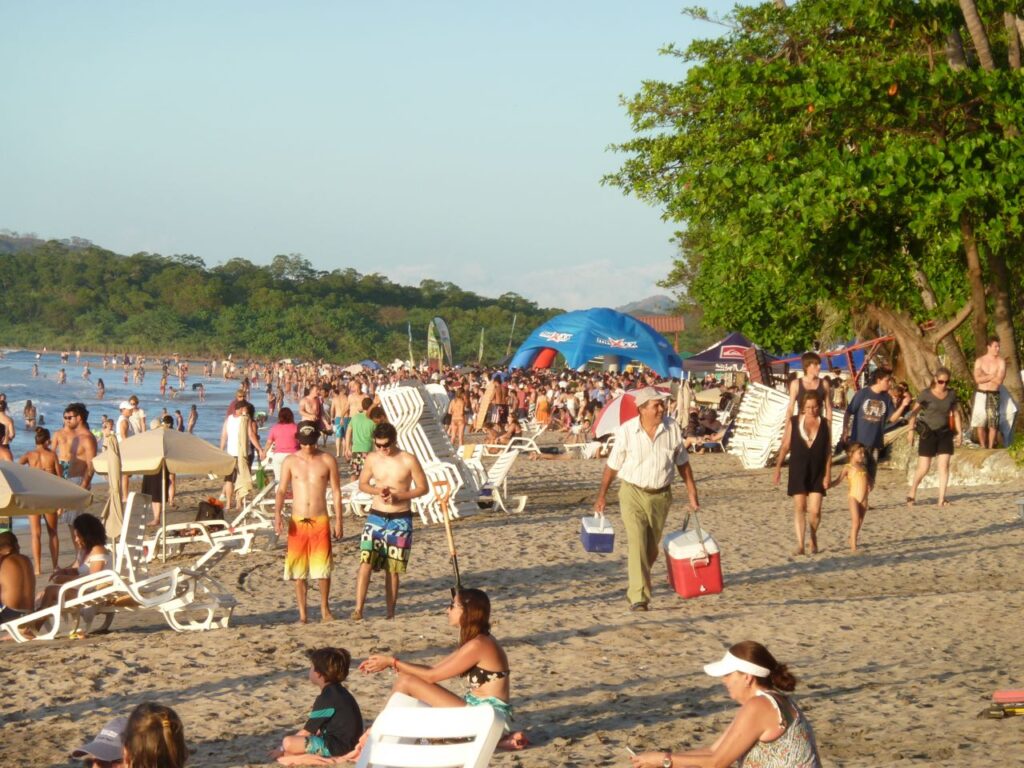
Tamarindo beach is pretty spectacular. It’s huge and sandy, with room for everyone to stake out a spot, even on the busiest week of the year. We’ve spent a ridiculous number of hours on it since we moved down in December 2011, with three kids who basically grew up in the water.
It’s also a real, natural beach. It isn’t groomed and managed the way a resort beach in Maui is, and that’s a big part of its character. So here’s what we tell every friend who comes to visit, starting with the stuff that actually keeps you safe.
The Short Version
- Learn to spot a rip current. If one catches you, don’t fight it. Swim parallel to the beach.
- Tamarindo has two high and two low tides every day, and the beach changes size dramatically. Check a tide table.
- Crocodiles live in the estuary at the north end. Stay out of the water there, and never wade across.
- Lifeguards cover part of the main beach. Nearby beaches may have none.
- Never leave valuables alone on the sand.
- Bring sandals and water, and find some shade. The sun and the sand are no joke.
- Sunset is around 5:20 to 6:10 pm depending on the month, and it’s worth planning your day around.
Rip Currents
For the most part, Tamarindo is a fairly calm bay, with surf waves in some spots and gentle swimming waves in others. But rip currents do happen, especially when a bigger swell shows up, and they’re the number one thing we’d want a visiting family to understand. A rip is a narrow current running straight out from shore. It won’t pull you under, but it will pull you away from the beach faster than you can swim against it.
Drownings do happen here. In April 2026 a visitor from the US died after a strong current pulled him out at Playa Tamarindo, and Costa Rica’s Red Cross reported that water emergencies on the Guanacaste coast had tripled this year (Infobae, in Spanish).
How to spot a rip
Before anyone goes in, stand on the sand and watch the water for a few minutes. Look for:
- A gap where the waves aren’t breaking, between stretches where they are.
- A channel of darker, smoother-looking water.
- Foam or debris moving steadily out to sea.
- River mouths and rocky points, where rips like to form.
If you get caught in one
- Stay calm and float. The current won’t pull you under.
- Don’t swim straight back to shore against it.
- Swim parallel to the beach until you’re out of the pull. Most rips are narrow.
- Once you’re free, angle back in toward shore.
- If you can’t get out, float and wave your arms for help.
That’s the advice from NOAA’s rip current safety page.
If someone else is in trouble
NOAA’s advice is not to swim out after them yourself, because a lot of rip current deaths are would-be rescuers. Get a lifeguard and throw them something that floats. Then call 911.
Lifeguards in Tamarindo
Tamarindo does have lifeguards, which isn’t a given in Costa Rica. The Santa Cruz municipality installed a lifeguard tower on the beach in 2019, and the guards have been paid through an agreement between the Costa Rica Tourism Institute and the Red Cross, with the local development association behind it (Voz de Guanacaste, 2021). The community Tamarindo Lifeguards program lists coverage from 9 am to 6 pm.
Here’s the honest part. The funding has never been guaranteed, and a 2026 report describes lifeguards at “certain points” on the beach, not everywhere. So swim near the tower when you can, and treat the lifeguards as backup, not a babysitter. Nearby beaches like Langosta may have no one at all. In an emergency, call 911.
Tides Are Huge in Tamarindo
Twice a day the tide goes out and the beach gets massive. Twice a day it comes back in and the beach gets very small. At high tide the water can sit 50 feet or more further up the sand than it does at low tide, and it can come in fast enough to sweep away your stuff (or at least get it really wet).
The times shift every day with the moon, so check the Playa Tamarindo tide table before you set up for the day. Tides matter for surfing too, which we cover on our surfing in Tamarindo page.
Walking to Langosta at low tide
One of the best free things to do here is walk south along the beach to the point, and if the tide is low, keep going around to Playa Langosta. At low tide the rocks turn into tide pools. The point is only passable at low water, so check the tide table before you go and give yourself time to get back before it comes in. More ideas like this are in our things to do in Tamarindo with kids guide.
Crocodiles at the Estuary
Walk north on Tamarindo beach and you’ll hit the estuary, the river that separates Tamarindo from Playa Grande. That’s where you stop.
Sun, Sand and Heat
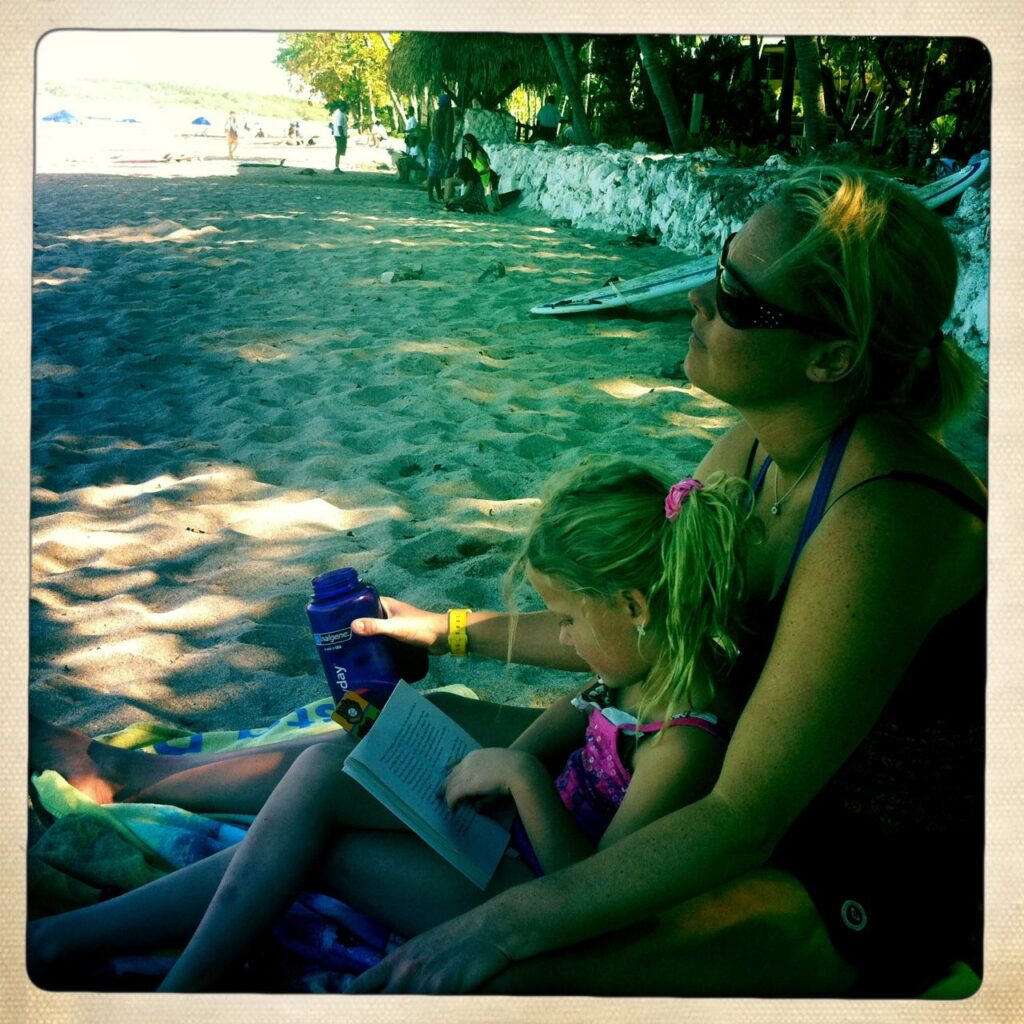
Tamarindo sits about 10 degrees north of the equator, and the sun here is a lot stronger than it feels with an ocean breeze on your face. A few things we always tell friends:
- Bring sandals. The sand gets hot enough to make you dance, and the roads around town are unpredictable underfoot.
- Find shade. The trees along the back of the beach are prime real estate in the middle of the day.
- Drink more water than you think. It’s hot and humid most of the year, and it’s easy to get dehydrated without noticing.
- Try a pipa. The fresh coconuts sold on the beach are delicious and a great way to rehydrate.
Our what to bring list covers sunscreen and the rest, and our Tamarindo weather page has the seasons.
Watch Your Step: Stingrays and Jellyfish
Watch where you’re walking. Tamarindo is a natural environment, and that means a few surprises on the sand and in the water:
- Rocks, especially around Pico Grande and the points.
- Sharp, pointy shells.
- The occasional creature you weren’t expecting.
Stingrays bury themselves in shallow sand, and almost every sting happens when someone steps on one. The fix is the “stingray shuffle”: slide your feet along the bottom as you walk in instead of taking big steps, and the rays swim off. A sting is very painful, so head to a clinic to get it cleaned and treated (Two Weeks in Costa Rica). Our health and wellness page lists the clinics in town.
Jellyfish show up now and then, usually as one or two washed up on the sand rather than a swarm. The more common nuisance is “sea lice,” tiny jellyfish larvae that cause an itchy, stinging rash for a few minutes. Surfers who stay in a long time get them most, and a long-sleeve rash guard helps.
Don’t Leave Anything Alone on the Sand
If you leave anything sitting on the beach (shoes included), there’s a chance it won’t be there when you get back. Petty theft is common in Costa Rica’s tourist areas, and the US State Department currently rates the country Level 2, “Exercise Increased Caution” (travel advisory). Tamarindo isn’t a scary place, but it pays to be sensible.
- Bring as little as you can to the beach.
- Leave passports and extra cash locked up where you’re staying.
- Never leave your phone or wallet alone on a towel.
- If your whole group is heading into the water, bury your sandals. It sounds silly, and it works.
Dogs on the Beach
We brought our own dog, Rindo, down to Costa Rica in 2014 (that took a three-part series to explain). We didn’t find any rule keeping dogs off Tamarindo beach itself, but keep yours under control around kids and other dogs, and pick up after it. Protected areas are different. Pets aren’t allowed in protected wildlife areas like the Ostional refuge (Voz de Guanacaste), and Playa Grande is part of Las Baulas National Marine Park, so check the signs before you bring a dog there.
Beach Vendors
You’ll see vendors walking the sand selling pipas (fresh coconut water) and snacks, and there are a few stores just off the beach for bottled water. It’s an easy way to stay hydrated without hauling a cooler. If you’re not interested, a friendly “no, gracias” is all it takes.
Stay for the Sunset

Tamarindo looks west over the Pacific, and sunset is a big deal here. Sunset is around 5:20 pm in early November and around 6:10 pm in early July, so it never gets late. Show up a little early and find a spot on the sand. Then let the kids run around while the sky does its thing. If you’d rather watch it with dinner, see our top sunset restaurants.
Staying close to the sand makes all of this easier. Our family home, Casa Colorado, is a 4- to 5-minute walk from the beach at the quieter south end of town. That makes the low-tide walk to Langosta easy, and the walk home after sunset even easier. Our where to stay guide has more options.
FAQ
Is Tamarindo beach safe for swimming?
Generally, yes. It’s a fairly calm bay, but rip currents do happen, especially with bigger swells. Watch the water before you go in and swim near the lifeguard tower when you can. Stay away from the estuary at the north end.
Are there lifeguards on Tamarindo beach?
Yes, on part of the main beach. A lifeguard tower has been in place since 2019, with guards funded through the Costa Rica Tourism Institute and the Red Cross. Coverage doesn’t reach the whole beach, and nearby beaches may have none. Call 911 in an emergency.
What should I do if I get caught in a rip current?
Stay calm and float, since the current won’t pull you under. Swim parallel to the beach until you’re out of the pull, then angle back to shore. If you can’t escape, float and wave for help.
Are there crocodiles at Tamarindo beach?
Yes, in the estuary at the north end of the beach. Stay out of the water there and keep kids away from the river mouth. Attacks were recorded in 2015 and 2016.
Can you walk from Tamarindo to Playa Langosta?
Yes, at low tide. Walk south along the beach and around the point. It’s only passable at low water, so check a tide table first and leave time to get back before the tide comes in.
What time is sunset in Tamarindo?
Between about 5:20 pm and 6:10 pm. It’s earliest in early November and latest in early July.
Last checked October 2026.