
« Back to the Guide to Tamarindo
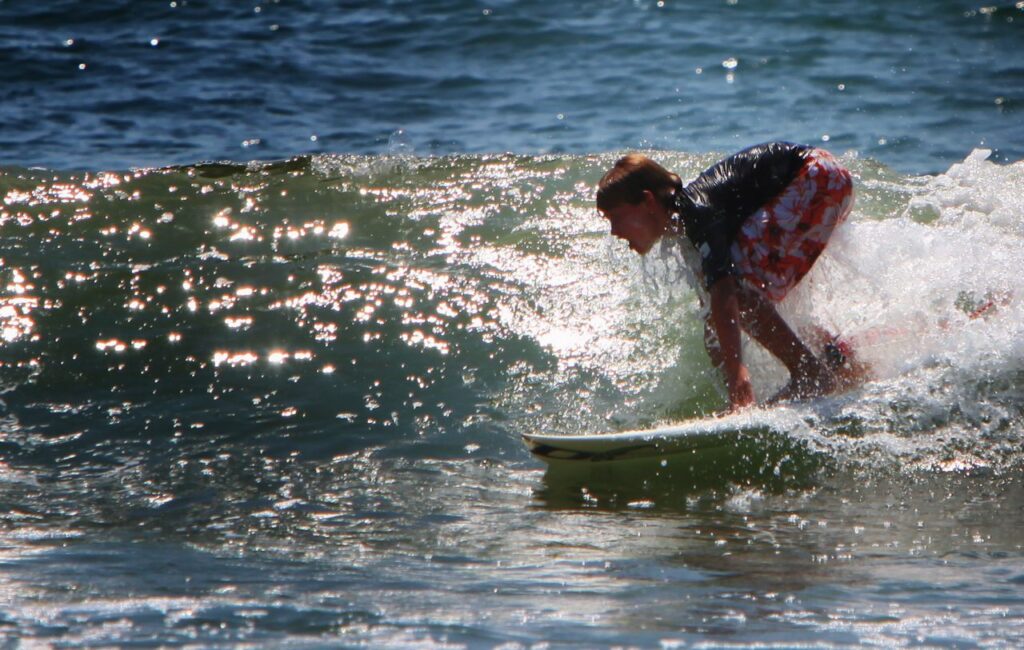
Tamarindo is a surf town first, and it’s a big part of why our family fell for this place. We landed in December 2011 and had a surf lesson the very next morning. A few months later, Ben and Jacob were paddling out in a kids’ competition, and later they spent years in TIDE Academy’s surf program before school. Erin and I got lapped by our own kids pretty quickly (we’re fine with it, mostly).
This page is the surf talk we’d give you over coffee. It covers the breaks and who each one suits, plus the best tides and who we’d take a lesson from. Tamarindo got famous in surf circles when it showed up in The Endless Summer II in 1994 (the Tico Times has the backstory), and the waves are still the reason a lot of people come.
The Short Version
- Playa Tamarindo is a sandy beach break that suits beginners, and most of it works best from mid to high tide.
- The tide comes in and goes out twice a day, so check a Tamarindo tide table before you paddle out.
- Beginners and kids should start at the south end, near Hotel Capitán Suizo.
- Pico Grande is shallow and rocky. It’s for experienced surfers only.
- Skip the river mouth at the north end. Crocodiles live in the estuary.
- Take your first lesson from a shop or school, not a stranger on the sand. Group lessons start around $60.
Where to Surf on Playa Tamarindo
Tamarindo gets two high tides and two low tides every day, and the difference is dramatic. At high tide the water can sit 50 feet or more further up the beach than it does at low tide. That matters for surfing, because most of these breaks want water over the sand and rocks. Older versions of this page told you to find a tide chart on our home page. That chart is long gone, so use the Playa Tamarindo tide table on Surf-Forecast instead.
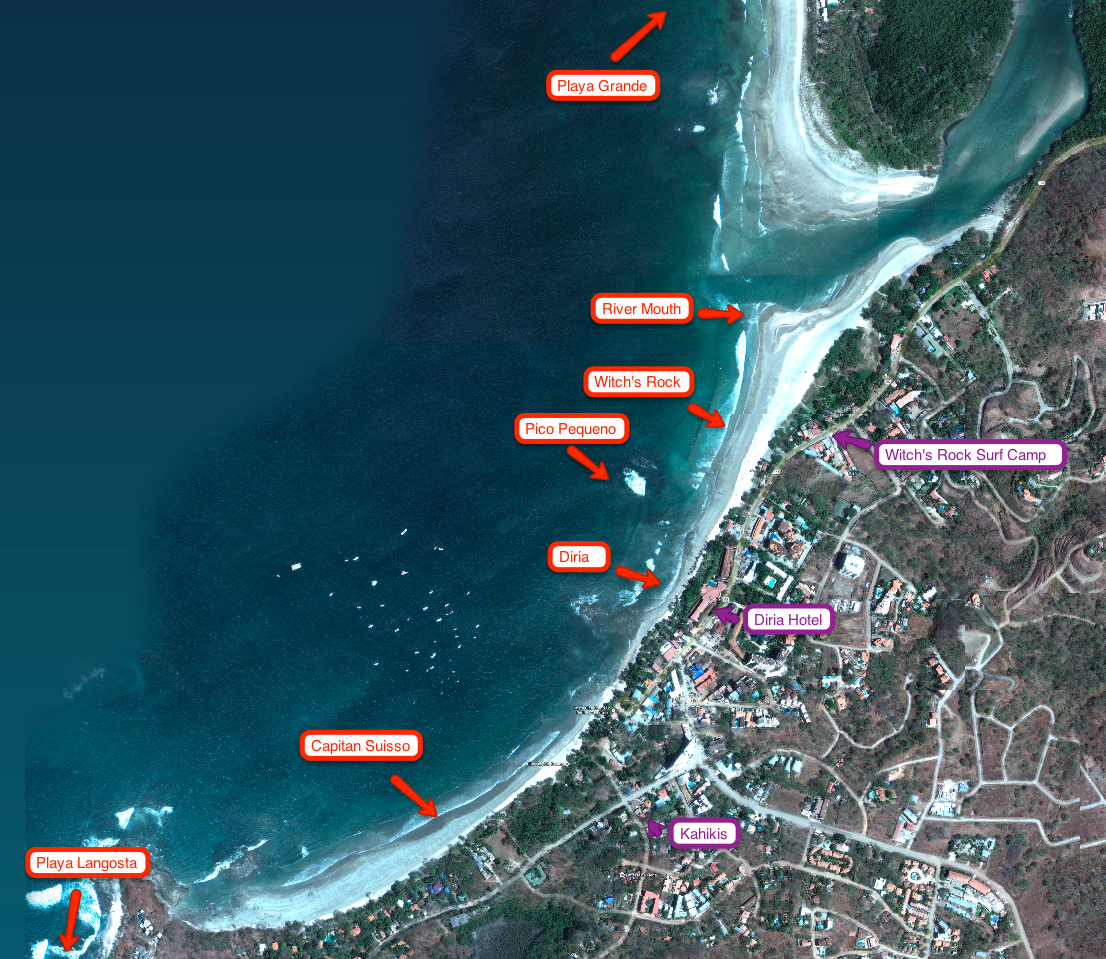
Looking at the water from the sand, here’s how the beach lines up from left to right (south to north).
| Break | Level | Best tide | Notes |
|---|---|---|---|
| Capitán Suizo | Beginners and kids on most days | High | Can turn into a really good wave when the swell lines up. |
| Tamarindo Diria | Kids to intermediate, depending on how far out you go | High (needed) | Rocky outside. Stay between the Diria’s palapa and the south edge of its restaurant. |
| Pico Grande | Advanced | High (required) | Shallow and rocky. Never dive in here. |
| Pico Pequeño | Intermediate | Mid-high to high | Rights and lefts, medium-long rides. |
| Witch’s Rock Surf Camp area | All levels | Mid to high | Watch for a few minutes and you’ll find your wave. |
| River mouth | Advanced | Mid-high | Crocodiles live in the estuary. We tell everyone to skip it. |
Capitán Suizo
There’s a fantastic break down at the south end of the beach, in front of Hotel Capitán Suizo. On most days it’s a perfect beginner wave, but when the swell comes in just right it can get seriously good. Look for a small concrete wall you can sit on and a tree hanging out over the sand. It’s best at high tide, and it’s where we’d start any kid or first-timer.
Tamarindo Diria
Right outside the Tamarindo Diria Beach Resort there’s a whole menu of waves. Stay up front for super kid-friendly whitewater. Head out to the middle set for a great beginner to intermediate ride, and if the swell is helping, the third set out can hold 4 to 6 footers. It can be rocky out there, so stay between the palapa that welcomes you to the Diria and the south edge of their restaurant. You need high tide here.
Pico Grande
Standing in front of the Diria, look right to the rock outcropping. At high tide the rocks sit a ways out, and at low tide you can walk right up to them. This is one of the most advanced breaks on Playa Tamarindo, and the waves get big on good swell days. The rides are short but really fun, and with the right swell you can link a ride all the way from Pico Grande to Pico Pequeño through the whitewater in between. Be super careful. It’s rocky and shallow, so never dive in the water here, and only go at high tide.
Pico Pequeño
Pico Pequeño sits just inside Pico Grande. On a typical day expect waist to shoulder high waves, and head high when a good swell shows up. It breaks both right and left, with fun, medium-long rides. You want mid-high to high tide.
Witch’s Rock Surf Camp
The whole stretch of beach in front of Witch’s Rock Surf Camp is packed with waves for every level, and it’s where a lot of the town’s surf contests have been staged over the years. Watch the ocean for a few minutes and you’ll find something that fits you. When the wind is offshore, barrels aren’t unusual at the lower end of the tide. Mid to high tide is best.
The river mouth
The river mouth at the north end is a fun, mostly right-hand wave for advanced surfers, and an older version of this page sent you there. We were wrong to treat the crocodiles as rumor. They’re real, and we no longer recommend surfing it.
Surfing Beyond Tamarindo Beach
Once you’ve got a few sessions in, the beaches on either side of town are worth the trip. A local surf shop can tell you which one is working that day.
| Beach | Level | Best tide | Notes |
|---|---|---|---|
| Playa Langosta (just south) | Sometimes OK for beginners, better with experience | Ask a shop | Rocks and rip currents, especially around the river mouth. |
| Playa Grande (across the estuary) | Intermediate and up | Ask a shop | Bigger, more powerful waves. Boat across or drive about half an hour. |
| Playa Avellanas (about 30 minutes south by car) | Beginners near the main access | Mid to high | Rocks in parts of the lineup. Little Hawaii is a reef wave for experienced surfers. |
Playa Langosta
Langosta is quieter and prettier than Tamarindo, and at low tide you can walk there along the beach. It’s only sometimes a beginner wave, though. There are rocks and rip currents, and the river mouth there pulls hard when the tide is going out. Our son Ben learned that firsthand in 2016, when he had to pull a swimmer out of that rip.
Playa Grande
Playa Grande sits just across the estuary from Tamarindo and has bigger, punchier waves. It’s a better fit for intermediate surfers and up than for anyone on their first lesson. A small boat crosses the river mouth for about $2 each way, or it’s roughly half an hour by car through Huacas and Matapalo.
Playa Avellanas
Avellanas is one of the most beautiful beaches we’ve ever seen. Ben and Jacob had a surf lesson there in our very first month, back in 2011. The beach breaks near the main access are friendly for beginners at mid to high tide, while the reef breaks have rocks in the lineup.
Witch’s Rock and Ollie’s Point by boat
Here’s a fun bit of confusion for newcomers: the Witch’s Rock Surf Camp in town is named after a real rock that’s about a two-hour boat ride north of Tamarindo. Surf boats run trips up there and to Ollie’s Point, and they’re only worth it once you’re comfortable in bigger waves.
Surf Lessons and Board Rentals
It’s easy to find a surf instructor in Tamarindo. They’re everywhere. Here are the places we’d point friends to, with prices we checked in October 2026.
- Iguana Surf: group lessons are $60 per person and private lessons are $100, plus tax. Semi-private sits in between at $80. Kids 12 and under need their own instructor, which adds $25 plus tax.
- SALT Surf As Life Therapy: we’ve recommended SALT and its director, Elias, for years. He’s passionate about sharing surfing and great with kids and adults alike. Their booking page lists 2-hour lessons from $60 (group) to $90 (private), but message them first to make sure they’re still teaching.
- Witch’s Rock Surf Camp: the classic surf camp experience at the north end of the beach, with lots of trips out of town too. They have no hard age rules and have taught kids as young as 5. If you’re staying somewhere else, you can join their program for $200 a day.
A word on Witch’s Rock. In our experience the instructors were a bit of a mixed bag (some great, some less so), and classes could get big. If you want a personal, dedicated lesson, we’d go with one of the others. For a fun surf adventure, Witch’s is a great pick.
Every surf shop in town rents boards, and most have solid instructors and good advice about where to go that day.
Surfing With Kids
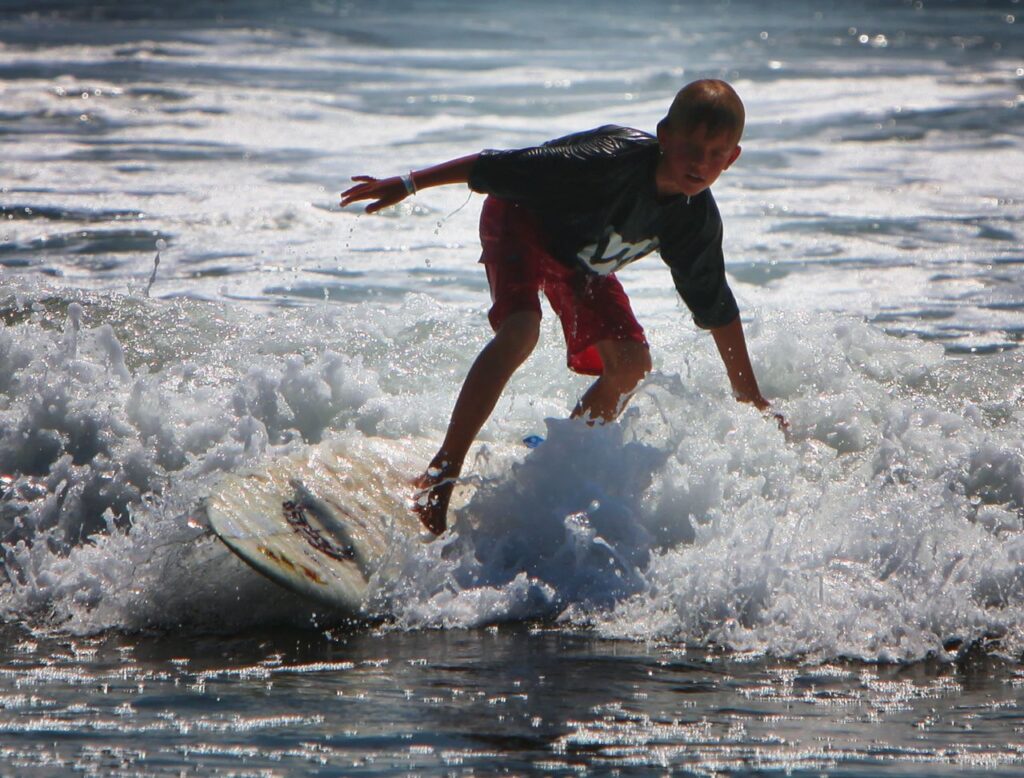
If you’re bringing kids, start them at Capitán Suizo or the inside waves at the Diria, at high tide, with an instructor who’s actually in the water with them. Tamarindo is a great place to learn because the waves are mostly forgiving and the bottom is mostly sand, but the beach gets crowded. A first-day lesson teaches kids where to sit and how to stay out of the way.
Our boys went from never surfing to competing in about four months, which still makes us laugh. Later, TIDE Academy ran a morning surf program before school. Ben wrote about waking up at 5:00 am to surf with his class, and how it beat playing basketball in sweaty gym clothes for P.E.
For more on keeping kids safe in the water, including rip currents and tides, see our beach tips. For everything else to do between sessions, see things to do in Tamarindo with kids.
Where to Stay for a Surf Trip
The closer you sleep to the sand, the easier dawn patrol gets. Our own family home, Casa Colorado, is a 4- to 5-minute walk from the beach at the quieter south end, near the beginner waves. It’s set up for surf trips, board rack included. Our where to stay guide covers the rest of town.
And if you’d like yoga with your surf, Erin leads our Five Parks Yoga retreats in Nosara, a surf town further down the Nicoya Peninsula. Surfing there is an optional add-on rather than part of the retreat, so you can surf as much or as little as you like. Before you go, check our Tamarindo weather page for the season and our what to bring list.
FAQ
Is Tamarindo good for beginner surfers?
Yes. Playa Tamarindo is a sandy beach break, and the south end near Hotel Capitán Suizo is a great beginner wave on most days. Go from mid to high tide, and take your first lesson from a shop or school.
What is the best tide for surfing in Tamarindo?
Mid to high tide for most breaks on the main beach. The breaks at the south end want high tide, and Pico Grande needs it. Tamarindo has two high and two low tides a day, so check a tide table.
How much is a surf lesson in Tamarindo?
As of October 2026, group lessons start around $60 per person at Iguana Surf and SALT, and private lessons run about $90 to $100. Iguana Surf adds $25 plus tax when a child 12 or under needs their own instructor.
Is it safe to surf the river mouth in Tamarindo?
We don’t recommend it. Crocodiles live in the Tamarindo estuary, and attacks were recorded in 2015 and 2016. Stay away from the river mouth and take the boat to Playa Grande instead of wading across.
Can kids learn to surf in Tamarindo?
Yes, ours did. Start at Capitán Suizo or the inside waves at the Diria at high tide, with an instructor in the water. Witch’s Rock Surf Camp has taught kids as young as 5.
Last checked October 2026.